The three standards at a glance
802.3af (PoE) delivers up to 15.4W at the switch port, of which about 12.95W is usable at the far end after cable loss — enough for VoIP desk phones, basic access points, and low-power sensors. 802.3at (PoE+) doubles that to 30W at the port / 25.5W usable, covering most modern IP cameras and Wi-Fi 5/6 access points. 802.3bt (PoE++) comes in two tiers: Type 3 at 60W/51W usable (Wi-Fi 6E/7 APs, PTZ cameras with heaters), and Type 4 at 90W/71.3W usable (thin clients, digital signage, some laptop charging use cases).
- 802.3af (PoE) — 15.4W at port, 12.95W usable
- 802.3at (PoE+) — 30W at port, 25.5W usable
- 802.3bt Type 3 (PoE++) — 60W at port, 51W usable
- 802.3bt Type 4 (PoE++) — 90W at port, 71.3W usable
The mistake almost everyone makes
A switch datasheet quotes two different numbers: per-port PoE budget and total switch PoE budget. They are not the same, and a 24-port PoE+ switch rated at 30W per port almost never has 720W of total budget (24 × 30W) — the real figure is typically 370–450W shared across all active ports. Plug in enough high-draw devices and the switch will start shedding power to lower-priority ports once the total budget is exhausted, even though every individual port is rated for more.
Sizing rule: sum the peak power draw of every PoE device you'll connect, add roughly 30% headroom for growth and worst-case draw, then choose a switch whose total PoE budget exceeds that number — not just a switch with an adequate per-port rating.
Worked example
16 Wi-Fi 6E access points at a realistic peak draw of ~25W each is 400W of actual demand. Add 30% headroom and you need roughly 520W of total switch PoE budget — which rules out most 24-port PoE+ switches (370–450W typical) and points to a PoE++ switch with 720W+ total budget, even though each individual AP's 25W draw would technically fit within a PoE+ port's 30W per-port limit.
Buying on FUSE
FUSE stocks PoE, PoE+, and PoE++ switches and injectors from Cisco, Aruba, Ubiquiti, and Netgear across EU warehouses in Malta, Poland, the Netherlands, and Germany.
Frequently asked questions
Can a PoE+ device work on a PoE (802.3af) port?
Generally no if the device needs more than 12.95W to function — PoE+ devices negotiate a higher power class with the switch, and a PoE-only port will either refuse to power it or provide insufficient power, causing the device to malfunction or fail to boot fully.
Is PoE++ backward compatible with PoE and PoE+ devices?
Yes — PoE++ switches and injectors are backward compatible and will correctly negotiate lower power delivery for PoE or PoE+ devices plugged into them, so you can mix device power classes on the same PoE++ switch without issue.
How do I check a switch's total PoE budget, not just per-port?
Check the datasheet specifically for "total PoE power budget" or "PoE power budget (switch)" — this is a separate figure from the per-port maximum wattage, and is the number that actually limits how many high-draw devices the switch can power simultaneously.
Do PTZ cameras need PoE++?
Most PTZ (pan-tilt-zoom) cameras with heaters or wipers for outdoor use draw enough power to require PoE++ Type 3 (60W/51W usable) or occasionally Type 4, particularly in cold climates where the heater draws continuously. Check the specific camera model's rated power draw before specifying.
What cabling do I need for PoE++ (802.3bt)?
802.3bt is rated for Cat5e minimum, but Cat6 or Cat6A is recommended at the higher Type 4 (90W) power level, particularly on longer runs, to minimize resistive power loss and heat build-up in the cable bundle.
Where can I buy PoE switches in the EU?
FUSE stocks PoE, PoE+, and PoE++ switches and injectors from Cisco, Aruba, Ubiquiti, and Netgear across EU warehouses in Malta, Poland, the Netherlands, and Germany, with trade pricing for resellers and integrators.
Buy network switches equipment on FUSE
Multi-warehouse EU stock from Malta, Poland, Netherlands, and Germany — with EU-resident technical support and trade pricing for resellers, integrators, and MSPs.
Shop the category
Live pricing and stock for the hardware compared above.
Buy the hardware in this article
Live FUSE pricing and stock for the hardware compared above.
 Cisco
CiscoCisco Catalyst C9300-48P-E network switch Managed L2/L3 Gigabit Ethernet (10/100/1000) Power over Ethernet (PoE) Grey
C9300-48P-E€7,875.07 TP-Link
TP-Link JetStream 24-Port 2.5GBASE-T and 4-Port 10GE SFP+ L2+ Managed Switch with 16-Port PoE+ & 8-Port PoE++
1722129€1,291.35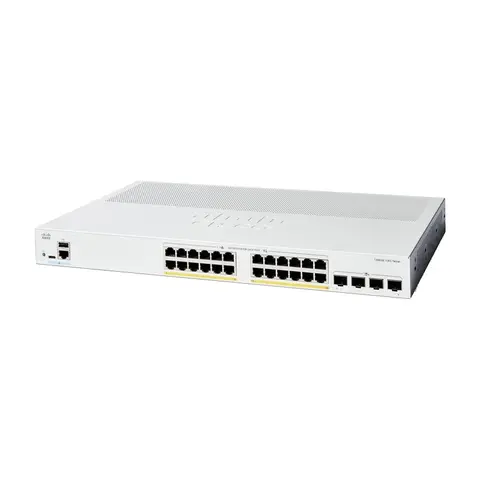 Cisco
CiscoCisco Catalyst C1300X-24P-4X network switch Managed L3 10G Ethernet (100/1000/10000) Power over Ethernet (PoE) Grey
C1300X-24P-4X€1,605.14 Unknown
TP-Link Switch Full Managed Layer2 8 Port • 8x 1 GbE • PoE Budget 62 Watt • 4x PoE At • LüFterlos, Omada • SG2008P
SG2008P(UN)€137.09 Grandstream Networks
Grandstream Networks GWN7813P network switch Managed L3 Gigabit Ethernet (10/100/1000) Power over Ethernet (PoE) Grey
GWN7813P€407.89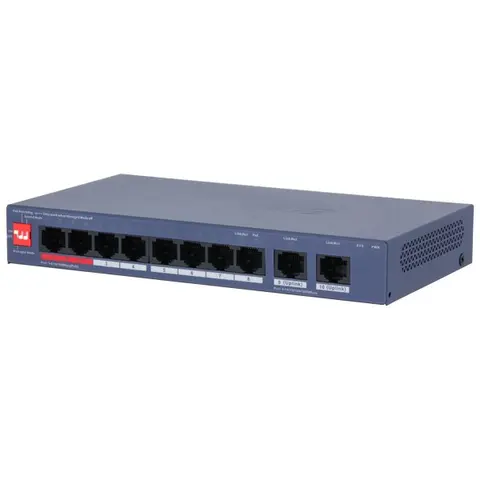 Dahua
DahuaDahua 8-port PoE Switch CS4010-8ET2GT-110
CS4010-8ET2GT-110€60.02