
Cold-chain visibility from loading bay to delivery
Link temperature loggers and vehicle systems to a monitoring platform while retaining local records when cellular coverage disappears.

Retain records through coverage gaps
Link alarms to a response process
Separate sensing from connectivity
How the solution connects
Follow the data from collection to the people and services that use it.
Read the connection map
- Calibrated logger → RUT956 gateway · Collection
- Refrigeration controller → RUT956 gateway · Collection
- RUT956 gateway → Monitoring platform · Protected transfer
- Monitoring platform → Dispatch alerts · Workflow
- Monitoring platform → Journey records · Workflow
- Monitoring platform → Maintenance review · Workflow
The challenge on the ground
A cellular connection cannot make an uncalibrated probe trustworthy, and a live dashboard is not a complete journey record. Coverage varies along routes, doors open at stops and the refrigeration controller may use a different interface from the temperature logger.
The integration needs to preserve timestamps and measurements before it considers the cloud connection.
Inside the design
Use a RUT956 vehicle router for the onboard Ethernet or supported serial equipment and the cellular uplink. Connect the calibrated logger using its documented interface. A Bluetooth-only sensor system needs its own compatible collector; native collection is not assumed.
Send the logger data to the monitoring platform over an authenticated encrypted connection. Keep the logger responsible for local recording when cellular service is unavailable.
Operating it day to day
Define alarm thresholds, delay periods and escalation with the cold-chain operator so a routine door opening does not produce the same response as an equipment fault. Specify how queued records are replayed and deduplicated after an outage.
Check ignition behaviour, safe DC conversion and battery drain while parked. Give dispatch a device-health view that distinguishes a missing connection from an actual temperature excursion.
What to test before handover
- Remove cellular service and verify that the logger retains time-stamped readings.
- Reconnect and reconcile uploaded records against the local log.
- Trigger a controlled temperature alarm and confirm acknowledgement and escalation.
- Cycle ignition power and inspect restart behaviour and vehicle battery load.
Technical references
The bill of materials
One refrigerated vehicle with an existing calibrated temperature logger; scale the same gateway pattern across the fleet. Quantities below describe the example; your proposal confirms the final equipment and services.
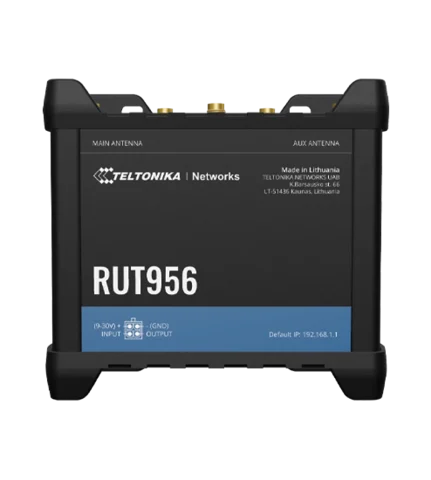
Teltonika RUT956 industrial LTE router
RUT956200000Vehicle connectivity
Interface to the existing logger; use appropriate protected DC power.
View product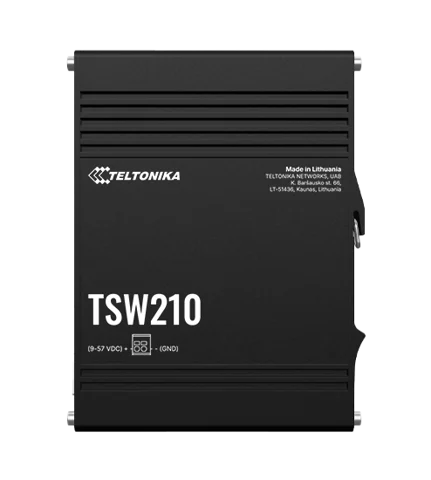
Teltonika TSW210 Industrial Ethernet Switch
TSW210000040Additional onboard Ethernet ports
Optional — Use only if the router ports are insufficient; not a PoE power source.
View productComplete the installation
The equipment above is one part of the project. Include these items in the final scope.
- Calibrated loggers and sensor collector if required
- Vehicle power converter, fuse and mounting
- Carrier service and monitoring-platform subscription
- Data integration and alarm commissioning
Questions before you specify
Can the router replace the temperature logger?
No. The logger supplies the calibrated measurement and local record. The router transports the data.
What happens when the vehicle loses coverage?
The logger continues recording locally. The integration must replay buffered records after reconnection and identify any gaps explicitly.
Let’s design it for your site.
Send us the details below. We can turn the reference architecture into a scoped design, equipment schedule and quotation.
Start your projectBring these to the first conversation
- 01Logger make, interface and calibration records
- 02Vehicle power details
- 03Routes and carrier coverage
- 04Alarm owners and required record retention

