
Cold-chain monitoring across storage and dispatch
Keep warehouse operations and temperature evidence connected while making local recording, alarm response and recovery explicit.

Preserve measurement records locally
Separate operations and sensor access
Test alarm delivery and recovery
How the solution connects
Independent uplinks meet a controlled network boundary. Local access is separated by purpose.
Read the connection map
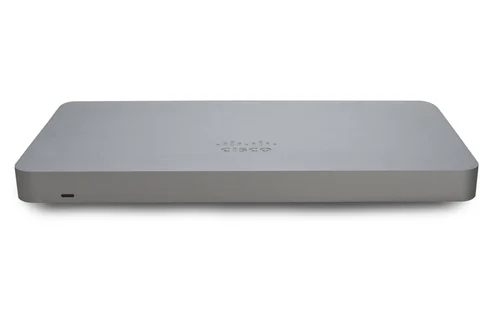
- Distribution-site WAN → MX75 firewall · Primary path
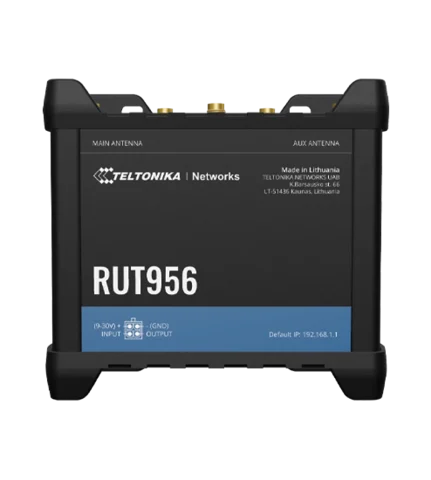
- RUT956 LTE · backup → MX75 firewall · Alternate WAN
- MX75 firewall → MS130-48P access · Policy boundary
- MS130-48P access → Cold-chain loggers · Separate zone
- MS130-48P access → Picking + dispatch · Separate zone
- MS130-48P access → Office + quality team · Separate zone
The challenge on the ground
Refrigerated rooms create difficult radio conditions, but connectivity is only one part of a cold-chain record. Probe calibration, logger timestamps, access control and alarm acknowledgement all affect whether the evidence is usable.
A dashboard with gaps must not silently imply that storage conditions stayed within limits.
Inside the design
Use an MX75 boundary and MS130-48P switching for operations and logger connectivity. Place indoor CW9172I APs in surveyed picking and dispatch areas; cold-room installations need equipment rated for their actual environment. Use RUT956 LTE as a secondary transport for essential monitoring and operations.
Keep sensor gateways, WMS devices, office users and guests in separate access zones. The calibrated logger retains readings locally when the network is unavailable.
Operating it day to day
Define alarm routing, escalation and acknowledgement with the quality team. Reconcile recovered data against the local logger after outages and identify duplicate or missing records.
Scope backup for the monitoring database, configuration and audit evidence, including a tested restore procedure. Network hardware alone does not validate the monitoring system or establish GDP compliance.
What to test before handover
- Disconnect the uplink and reconcile recovered measurements against the logger.
- Trigger a controlled alarm and confirm escalation and acknowledgement.
- Run a pick/dispatch workflow over the backup path.
- Restore a representative monitoring dataset and review its audit history.
Technical references
The bill of materials
One pharmaceutical distribution site with cold rooms, picking areas and dispatch; measurement devices are an existing validated system. Quantities below describe the example; your proposal confirms the final equipment and services.
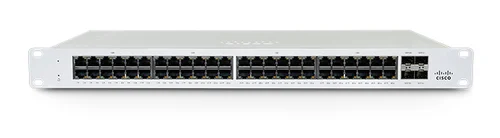
Cisco Meraki MS130-48P Cloud Managed 48-Port PoE Switch
MS130-48POperations and logger switching
View product
Complete the installation
The equipment above is one part of the project. Include these items in the final scope.
- Calibrated sensors and validated monitoring platform
- Cold-room-rated wireless equipment if required
- Backup, retention and alarm services
- Licences, UPS, cabling and LTE plan
Questions before you specify
Does the network design validate the cold chain?
No. It supports connectivity and access control. The measurement system, procedures and validation evidence remain the responsibility of the relevant operational and quality teams.
Let’s design it for your site.
Send us the details below. We can turn the reference architecture into a scoped design, equipment schedule and quotation.
Start your projectBring these to the first conversation
- 01Validated logger platform and interfaces
- 02Cold-room conditions and floor plans
- 03WMS/scanner requirements
- 04Quality-team retention and recovery requirements