
Event internet designed for the busy hour
Bring exhibitor payments, production traffic and guest access onto a planned network with independent uplinks and clear service priorities.

Protect payments and production traffic
Use independently tested uplinks
Hand over a repeatable event network
How the solution connects
Independent uplinks meet a controlled network boundary. Local access is separated by purpose.
Read the connection map
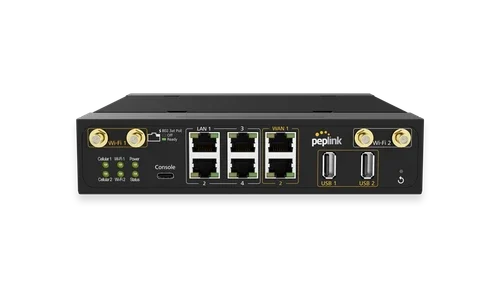
- Venue / satellite WAN → Peplink MBX Mini · Primary path
- Cellular transport → Peplink MBX Mini · Alternate WAN
- Peplink MBX Mini → Event PoE switch · Policy boundary
- Event PoE switch → Production + ticketing · Separate zone
- Event PoE switch → Exhibitor payments · Separate zone
- Event PoE switch → Guest wireless · Separate zone
The challenge on the ground
An empty venue test can be misleading: cellular service and Wi-Fi conditions change when exhibitors and visitors arrive. Ticket scanners, payment terminals and production teams also have different tolerance for interrupted sessions.
The network needs a service priority plan before it needs more bandwidth.
Inside the design
Use a Peplink MAX MBX Mini with a satellite Ethernet transport where venue permission and sky view allow it. The selected modem configuration provides cellular transport. A compact managed PoE switch serves indoor CW9172I APs and wired priority devices.
Use separate production, exhibitor/payment and guest networks. Add a licensed SpeedFusion endpoint when the production workflow specifically needs tunnel continuity; do not assume it from the router alone.
Operating it day to day
Commission the network at the busiest available rehearsal, with per-service bandwidth limits and an agreed guest cap. Avoid mounting APs inside metal stands.
Record every temporary cable, power source and WAN account, and keep a labelled spare kit. After the event, remove temporary credentials and retain a configuration snapshot for the next venue.
What to test before handover
- Test ticket scanning and payments while generating representative guest load.
- Exercise each uplink and any licensed tunnel mode.
- Check exhibitor isolation and production-only access.
- Demonstrate restart from a cold power-up using the handover sheet.
Technical references
The bill of materials
One indoor exhibition area or event production zone. Audience capacity and venue RF conditions determine AP quantity. Quantities below describe the example; your proposal confirms the final equipment and services.
Starlink Performance Gen 3
SLK-PFMSatellite WAN option
Optional — Performance Gen 3; confirm regional service eligibility, mounting and power for the installation.
View product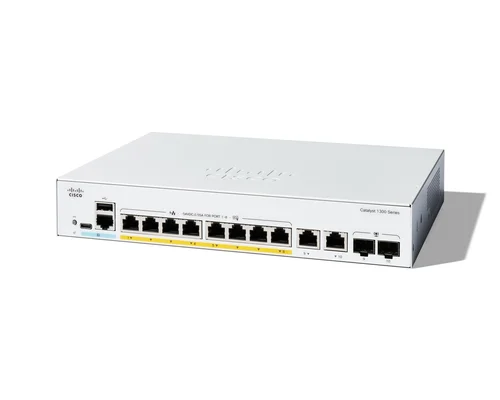

Cisco CW9172I indoor access point
CW9172I-CFGIndoor event APs
Initial layout only; capacity survey sets the final count.
View product
Peplink FusionHub 100
FHB-100-AOptional tunnel endpoint
Optional — Add only for the agreed SpeedFusion workflow.
View productComplete the installation
The equipment above is one part of the project. Include these items in the final scope.
- Mobile/venue/satellite services
- AP and Peplink licences
- Protected power, cabling and mounting
- On-site commissioning and event support
Questions before you specify
Can the advertised 5G speed be used as the event capacity?
No. Measure sustained performance at the venue and reserve capacity for priority services. Crowd loading can change cellular performance substantially.
Let’s design it for your site.
Send us the details below. We can turn the reference architecture into a scoped design, equipment schedule and quotation.
Start your projectBring these to the first conversation
- 01Expected attendance and exhibitor count
- 02Production bitrate and payment systems
- 03Venue WAN and satellite permissions
- 04Install/rehearsal/strike schedule


