
Passenger Wi-Fi without disrupting terminal operations
Plan for arrival and departure bursts while separating public access, ticketing, staff devices and surveillance.

Plan around sailing-time demand
Keep ticketing ahead of public traffic
Separate indoor and exposed installations
How the solution connects
Independent uplinks meet a controlled network boundary. Local access is separated by purpose.
Read the connection map
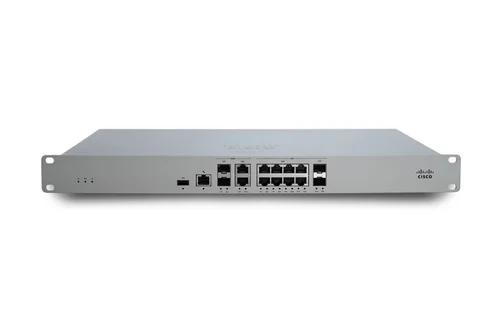
- Terminal circuit → MX85 firewall · Primary path
- RUTC50 5G · backup → MX85 firewall · Alternate WAN
- MX85 firewall → MS130-48P PoE · Policy boundary
- MS130-48P PoE → Passenger hall Wi-Fi · Separate zone
- MS130-48P PoE → Ticketing + staff · Separate zone
- MS130-48P PoE → CCTV isolated network · Separate zone
The challenge on the ground
A terminal’s wireless demand arrives in waves. Hundreds of passengers may join shortly before boarding while ticket scanners and staff devices need consistent access.
The hall survey must account for queue locations and crowd absorption, and the public network must not become a route into operational systems.
Inside the design
Use an MX85 boundary with MS130-48P PoE switching and CW9176I indoor APs in the passenger hall. Connect a RUTC50 cellular backup for selected terminal services.
Assign separate public, ticketing, staff, CCTV and management policies. Outdoor boarding lanes require suitable outdoor APs and cameras; indoor equipment is not extended to exposed areas simply because it is nearby.
Operating it day to day
Apply guest bandwidth limits and an onboarding process that works for travellers with different devices and languages. Test a boarding workflow during the busiest operating period and reserve backup capacity for ticketing and staff.
Camera storage and retention need their own design, with named operators and an export procedure.
What to test before handover
- Test boarding scanners during representative public Wi-Fi load.
- Measure join and roaming behaviour along normal passenger queues.
- Disconnect primary WAN and verify the selected essential services.
- Confirm public devices cannot reach ticketing, CCTV or management.
Technical references
The bill of materials
One indoor passenger hall with ticketing and staff areas; quayside coverage is a separate outdoor design. Quantities below describe the example; your proposal confirms the final equipment and services.
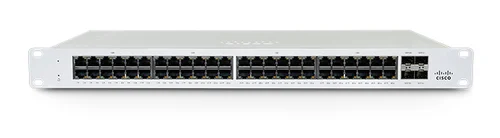
Cisco Meraki MS130-48P Cloud Managed 48-Port PoE Switch
MS130-48PIndoor PoE distribution
View product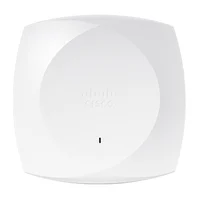
Cisco CW9176I indoor access point
CW9176I-CFGPassenger hall APs
Indoor quantity is a survey assumption.
View product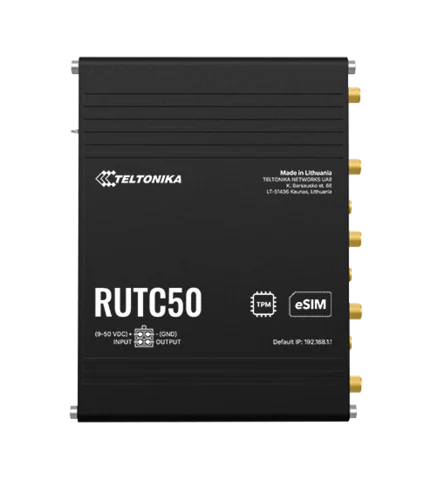
Complete the installation
The equipment above is one part of the project. Include these items in the final scope.
- Network subscriptions and carrier services
- Outdoor APs/cameras if required
- CCTV recording and retention
- Cabinet, UPS and structured cabling
Questions before you specify
Can passenger Wi-Fi stay fully open during cellular backup?
Only if the measured capacity and data plan support it. The default design reserves backup capacity for ticketing and operational staff.
Let’s design it for your site.
Send us the details below. We can turn the reference architecture into a scoped design, equipment schedule and quotation.
Start your projectBring these to the first conversation
- 01Passenger peaks by sailing
- 02Hall and queue layout
- 03Ticketing and scanner requirements
- 04Outdoor coverage and CCTV scope


