
Feed-barge connectivity that separates control and reporting
Combine satellite and cellular transport for aquaculture operations while keeping feeding control local and telemetry resilient to interruptions.

Keep feeding control local
Prioritise telemetry over bulk video
Design for exposed marine conditions
How the solution connects
Independent uplinks meet a controlled network boundary. Local access is separated by purpose.
Read the connection map
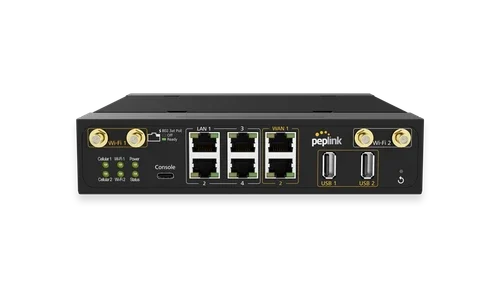
- Satellite Ethernet WAN → Peplink MBX Mini · Primary path
- Cellular WAN → Peplink MBX Mini · Alternate WAN
- Peplink MBX Mini → Protected access layer · Policy boundary
- Protected access layer → Local feed control · Separate zone
- Protected access layer → Telemetry + cameras · Separate zone
- Protected access layer → Crew / support access · Separate zone
The challenge on the ground
Camera viewing, biomass records and feed-system support place very different demands on a barge connection. Cellular coverage changes with distance and terrain, while satellite services have installation and plan constraints.
The control system must have a defined local operating mode when neither path is available.
Inside the design
Use a Peplink MAX MBX Mini inside a suitable protected space, with an external satellite Ethernet transport and the selected cellular modem/antenna arrangement. If a persistent tunnel is required, terminate SpeedFusion at a sized FusionHub host ashore or in the cloud.
Keep control, telemetry, cameras and crew access in separate policy zones. Integrate sensors through their actual logger or protocol gateway; an M-Bus meter gateway is not a universal marine sensor interface.
Operating it day to day
Prioritise control-system reporting and alarms before video viewing, bulk transfers and crew traffic. Agree how cameras reduce bitrate or stop remote upload during constrained service.
Specify marine mounting, cable sealing, grounding and DC protection, and document antenna separation and cable losses. Keep a local incident procedure for communications loss rather than making shore connectivity the only way to operate the barge.
What to test before handover
- Disconnect each WAN and verify the selected telemetry/tunnel behaviour.
- Confirm local feeding control with all external services unavailable.
- Load-test remote video without starving alarm delivery.
- Reconcile buffered sensor records after reconnection.
Technical references
The bill of materials
One feed barge with an existing local control system and a shore operations team. Quantities below describe the example; your proposal confirms the final equipment and services.

Starlink Performance Gen 3
SLK-PFMSatellite transport
Performance Gen 3; confirm regional service eligibility, mounting and power for the installation.
View product
Peplink FusionHub 100
FHB-100-AVirtual tunnel endpoint
Hosting and entitlement required.
View product
Complete the installation
The equipment above is one part of the project. Include these items in the final scope.
- Marine antennas and sealed cabling
- Protocol-compatible logger/gateway
- Satellite/cellular services and licences
- DC protection, enclosure and remote endpoint hosting
Questions before you specify
Can shore connectivity be used for real-time feeding control?
This reference keeps control local. Any remote-control dependency requires a separate control-system and operational risk assessment.
Let’s design it for your site.
Send us the details below. We can turn the reference architecture into a scoped design, equipment schedule and quotation.
Start your projectBring these to the first conversation
- 01Operating area and available carriers
- 02Control and sensor interfaces
- 03Camera and telemetry data budgets
- 04Marine power and mounting constraints


