
Multiple vessel WANs, one deliberate traffic policy
Combine satellite services and cellular transports around a Peplink edge, with clear priorities, endpoint sizing and measurable recovery behaviour.
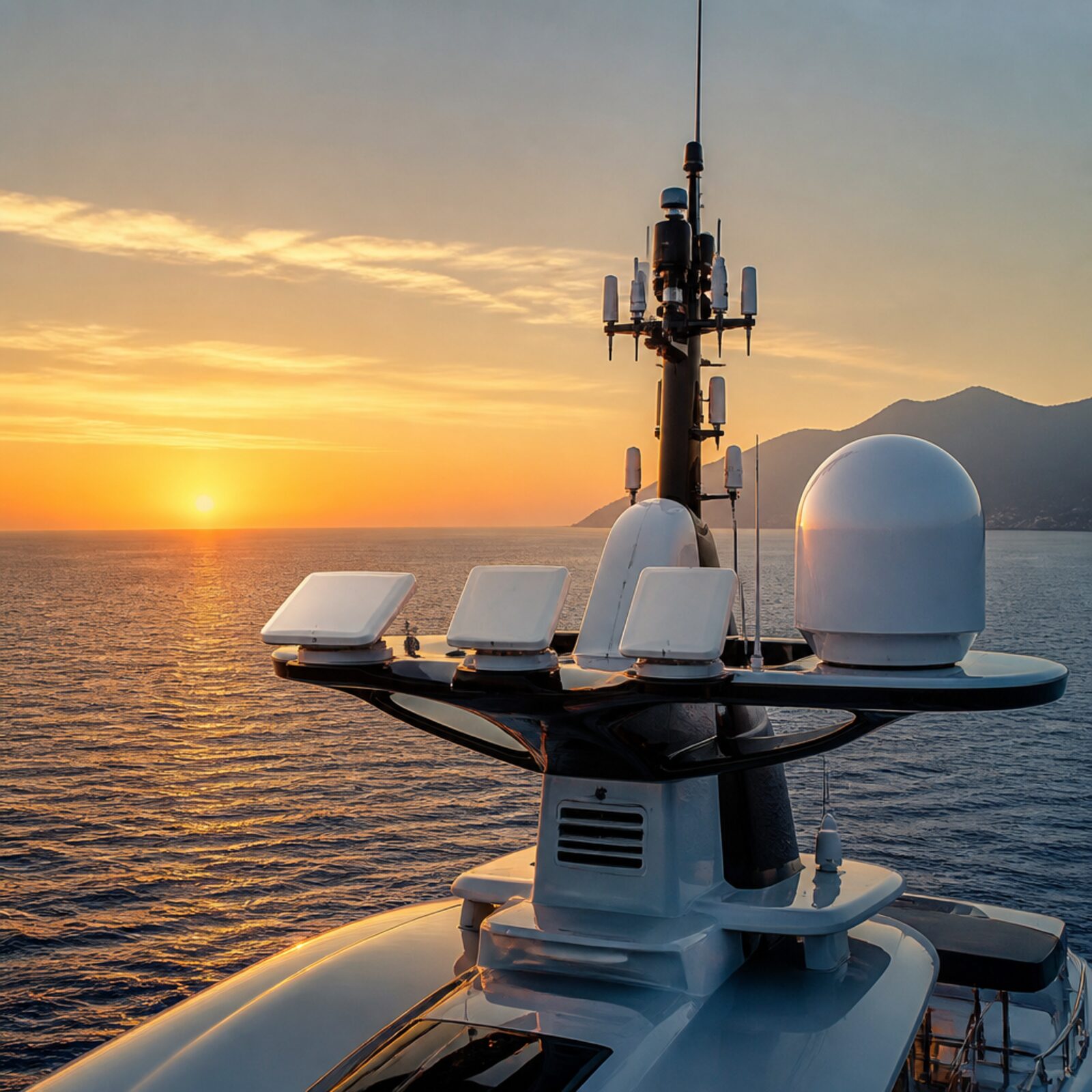
Identify shared failure points
Budget tunnel overhead and data usage
Prioritise operational traffic at sea
How the solution connects
Follow the data from collection to the people and services that use it.
Read the connection map
- Vessel operations → SDX Pro · multi-WAN · Collection
- Guest + crew networks → SDX Pro · multi-WAN · Collection
- SDX Pro · multi-WAN → FusionHub endpoint · Protected transfer
- FusionHub endpoint → Business services · Workflow
- FusionHub endpoint → Internet access · Workflow
- FusionHub endpoint → Protected support · Workflow
The challenge on the ground
Multiple terminals do not automatically create independent service. They may share a provider outage, obstructed mounting area, power feed or tunnel endpoint.
A vessel WAN design needs an explicit failure model and a traffic policy for the reduced-capacity state.
Inside the design
Use a Balance SDX Pro configuration matched to the required interfaces and installed modules. Feed independently provisioned satellite Ethernet transports and separately specified cellular modem hardware into the edge. Terminate SpeedFusion on a sized FusionHub host.
Treat onboard operations, guest traffic and crew access as separate policy classes. Select bonding, smoothing or ordinary WAN routing according to the application; each has different overhead and session behaviour.
Operating it day to day
Confirm maritime service eligibility, operating-region restrictions and data allowances for each transport. Record the power and mounting dependencies and avoid describing two services from one provider as fully independent.
Monitor loss, latency and sustained uplink at the tunnel endpoint. Keep a reduced-service policy that preserves operational access before entertainment and bulk synchronisation.
What to test before handover
- Fail each WAN and then the common tunnel endpoint.
- Measure sustained tunnel throughput with the selected operating mode.
- Verify priority traffic under a constrained data/throughput profile.
- Test power recovery and local LAN operation without WAN service.
Technical references
The bill of materials
One vessel WAN edge serving an existing onboard LAN. Paired hardware and diverse endpoint hosting are additional availability choices. Quantities below describe the example; your proposal confirms the final equipment and services.
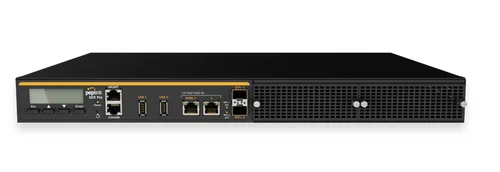
Peplink Balance SDX Pro
BPL-SDX-PRO-M2Vessel multi-WAN edge
Quote installed modules and interfaces explicitly.
View product
Peplink FusionHub 500
FHB-500-AVirtual tunnel endpoint
Licence tier is provisional until endpoint capacity and use are sized.
View product
Starlink Performance Gen 3
SLK-PFMExample satellite terminals
Performance Gen 3; confirm regional service eligibility, mounting and power for the installation.
View productComplete the installation
The equipment above is one part of the project. Include these items in the final scope.
- Satellite service plans and independent transport design
- Cellular modems and marine antenna system
- Endpoint hosting, subscriptions and monitoring
- Vessel LAN, protected power and cabling
Questions before you specify
Do two satellite terminals guarantee continuous service?
No. Assess provider, mounting, power and endpoint dependencies. The commissioning plan tests each path and the common failure points.
Let’s design it for your site.
Send us the details below. We can turn the reference architecture into a scoped design, equipment schedule and quotation.
Start your projectBring these to the first conversation
- 01Operating regions and voyage pattern
- 02Transport providers and terminal inventory
- 03Application priorities and tunnel modes
- 04Required hardware and endpoint resilience


